Quick Answer
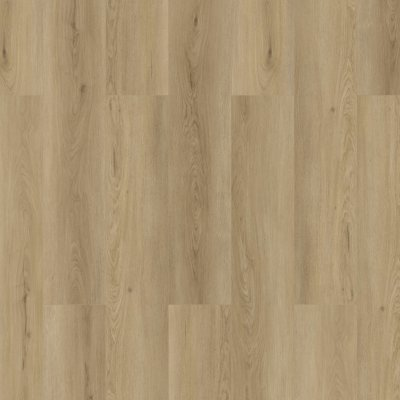
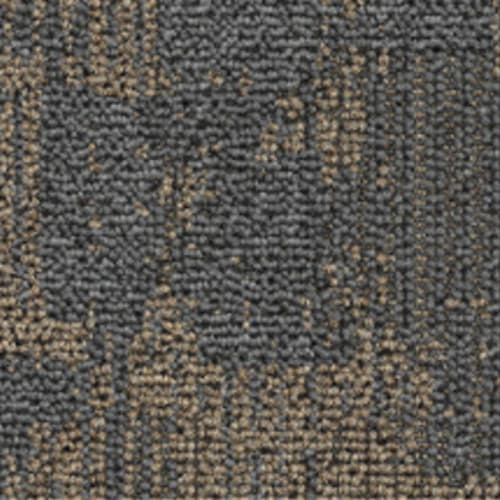
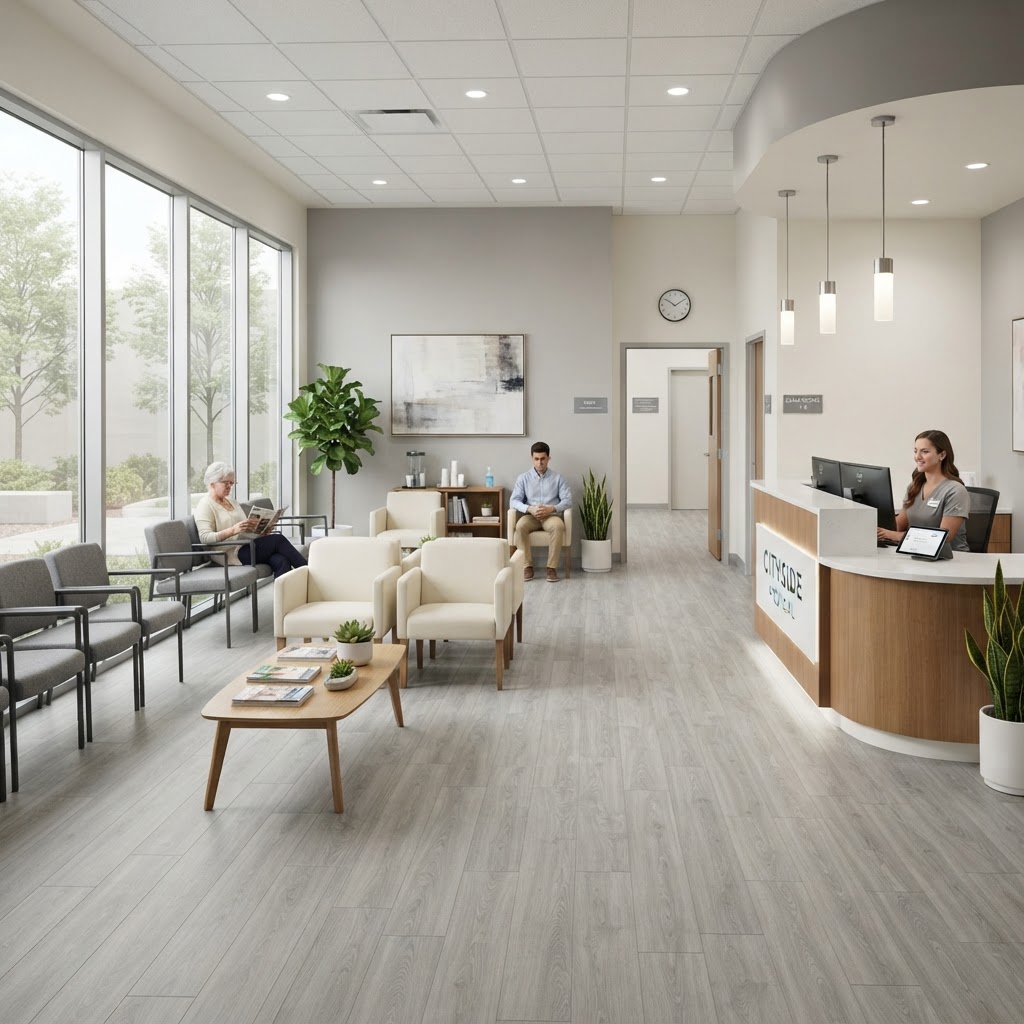
The best flooring for medical offices is a zoned approach: glue down luxury vinyl in treatment areas, exam rooms, and corridors (for infection control and cleanability) and commercial carpet tile in waiting rooms and administrative areas (for comfort and acoustics). This combination meets healthcare requirements while creating a welcoming patient environment.
PTAH Flooring installs medical office flooring throughout the Treasure Coast, working with practice owners and facility managers to meet healthcare compliance standards.
Expert Tip: In medical environments, the flooring must do more than look good — it must support infection control protocols, withstand aggressive cleaning chemicals, and provide a safe, slip-resistant surface. Never compromise on product specification in a healthcare setting.
Why Medical Office Flooring Is Different
Medical offices face requirements that standard commercial spaces do not:
- Infection control: Flooring in treatment areas must be impervious and cleanable with hospital-grade disinfectants
- Slip resistance: Wet surfaces from spills, cleaning, or medical procedures create slip hazards
- Chemical resistance: Floors must withstand frequent cleaning with harsh disinfectants without degrading
- Acoustic performance: Patient comfort and privacy benefit from flooring that reduces noise transmission
- Hygiene standards: Healthcare facilities must meet specific cleanliness and material requirements
- Rolling loads: Gurneys, wheelchairs, and equipment carts require dimensionally stable flooring
Zoned Flooring Approach
| Zone | Recommended Flooring | Why |
|---|---|---|
| Treatment/exam rooms | Glue down vinyl (20+ mil, heat-welded seams) | Impervious, cleanable, infection control |
| Corridors | Glue down vinyl (28 mil) | Heavy traffic, rolling loads, cleanable |
| Waiting rooms | Commercial carpet tile (Class 33, cushion back) | Comfort, acoustics, professional appearance |
| Reception/admin | Carpet tile or glue down vinyl | Based on traffic and preference |
| Restrooms | Glue down vinyl | Waterproof, cleanable |
| Entry/lobby | Glue down vinyl (28 mil, wood look) | First impression, heavy traffic |
Glue Down Luxury Vinyl for Treatment Areas
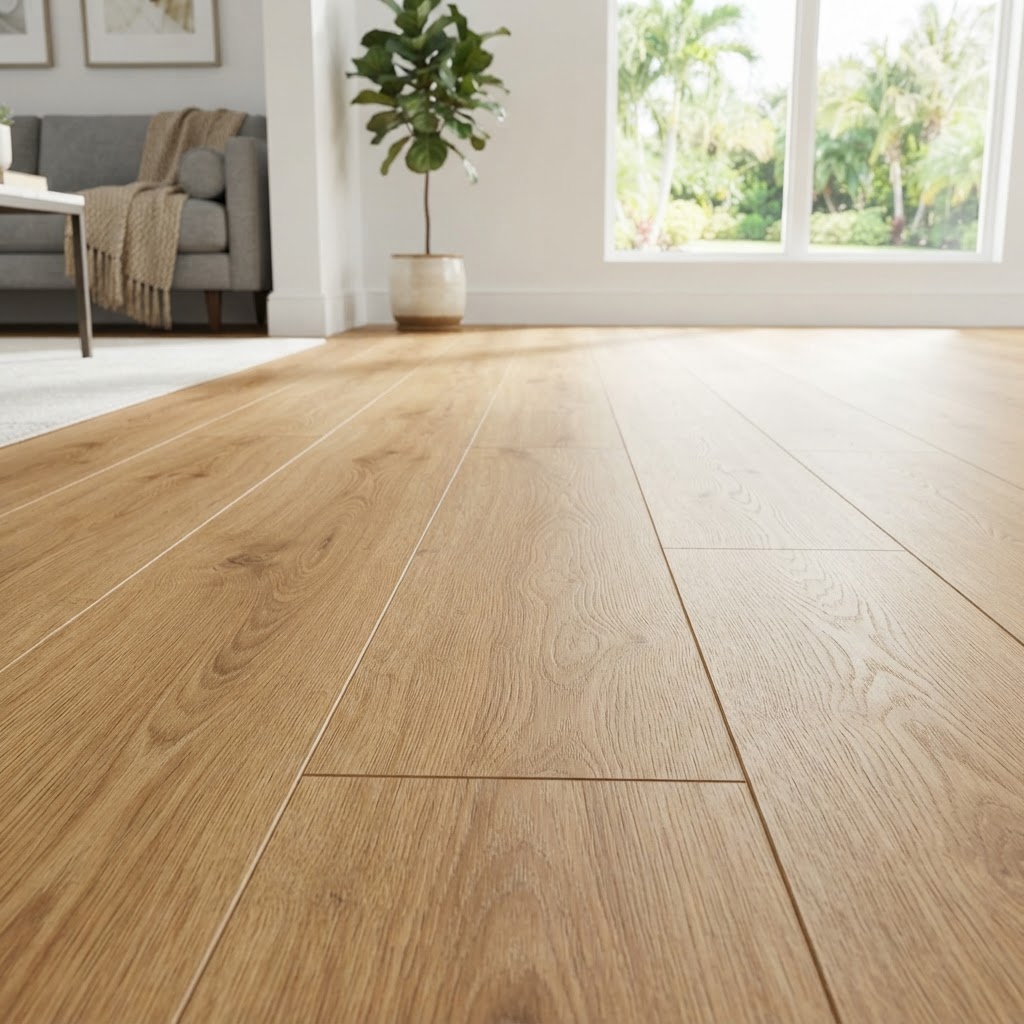
Glue down luxury vinyl is the industry standard for medical treatment areas, exam rooms, and corridors. Here's why:
Hygiene and Cleanability
- Impervious surface: Vinyl does not absorb liquids, bacteria, or contaminants
- Heat-welded seams: Seams can be heat-welded to create a virtually seamless surface with no gaps for bacteria
- Disinfectant compatibility: Withstands cleaning with hospital-grade disinfectants, bleach solutions, and quaternary cleaners
- No grout lines: Unlike ceramic tile, there are no grout lines to harbor bacteria
Slip Resistance
- Available with slip-resistant textures rated for commercial wet areas
- Provides traction even when wet from spills or cleaning
Durability
- 20–28 mil wear layers withstand heavy medical traffic
- Dimensional stability handles gurneys, wheelchairs, and equipment carts without shifting
- 10–15 year lifespan in medical environments
Explore our Glue Down Luxury Vinyl Collection for commercial-grade products suitable for medical applications.
Expert Tip: For treatment areas, specify glue down vinyl with heat-welded seams. This creates a continuous, impervious surface with no joints for bacteria to colonize — a critical infection control measure in medical environments.
Commercial Carpet Tile for Waiting Rooms
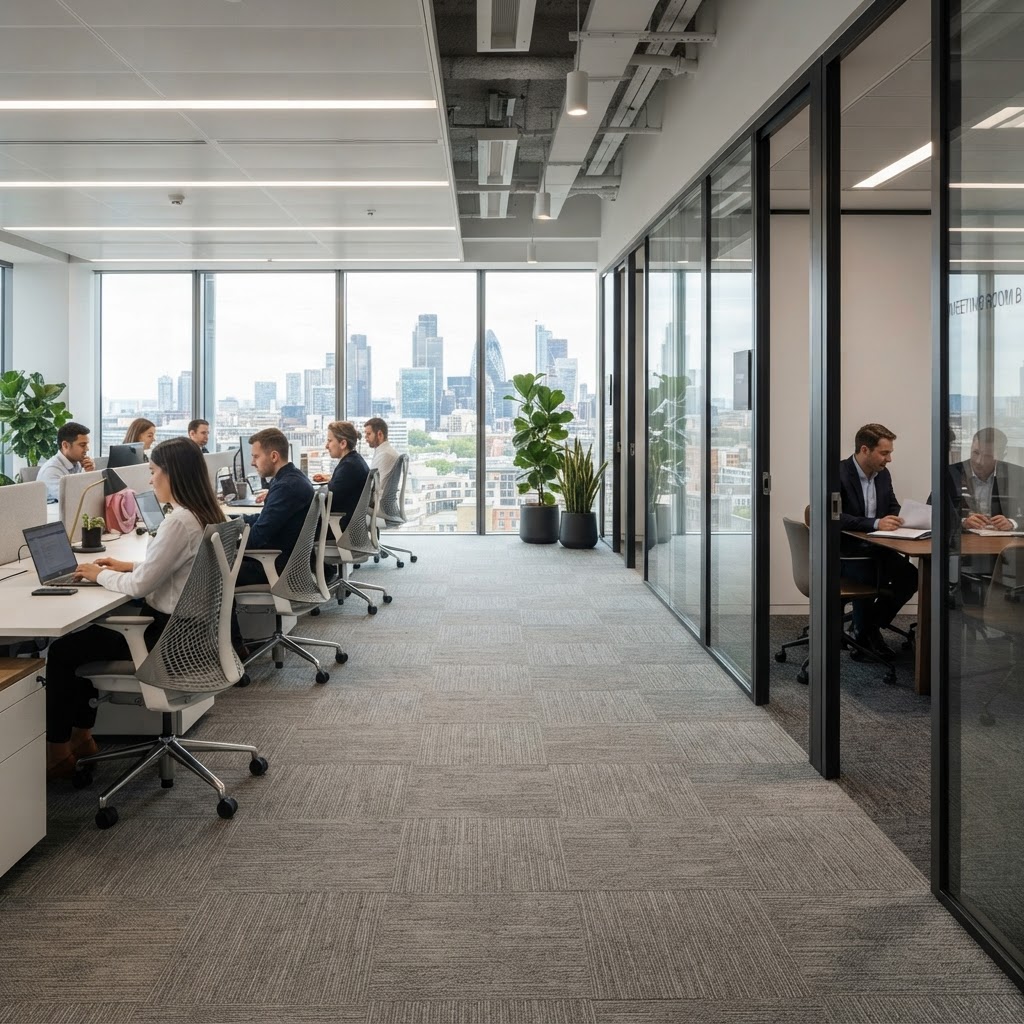
Carpet tile is appropriate and beneficial in waiting rooms and administrative areas where comfort and acoustics matter and infection control requirements are less stringent.
Why carpet tile works in waiting rooms:
- Acoustic comfort: Cushion-backed carpet tile absorbs noise, creating a calmer waiting environment
- Patient comfort: Softer surface is more comfortable for patients who may be in pain or anxious
- Professional appearance: A wide range of colors and patterns creates a welcoming, non-clinical feel
- Stain management: Solution-dyed nylon resists stains; damaged tiles are individually replaceable
- Moisture-impervious backing: Prevents spills from reaching the subfloor
What to specify:
- Class 33 traffic rating for heavy commercial use
- Solution-dyed nylon fiber for stain and fade resistance
- Moisture-impervious backing to prevent subfloor contamination
- Cushion backing for acoustic performance
See our Carpet Tile Collection and Commercial Carpet Tile Buying Guide for detailed product information.
Healthcare Requirements
Medical offices must meet specific standards that influence flooring selection:
Infection Control (OSHA and CDC guidelines)
- Treatment area flooring must be impervious and cleanable
- No carpet in treatment areas, exam rooms, or soiled utility areas
- Floors must withstand EPA-registered hospital disinfectants
- Seams in resilient flooring should be heat-welded in critical areas
Slip Resistance (ADA and ANSI standards)
- Flooring must meet minimum slip-resistance coefficients
- Areas prone to wetness (restrooms, near sinks) require higher slip resistance
- Transition strips must be flush to prevent trip hazards
Chemical Resistance
- Flooring must withstand repeated cleaning with:
- Quaternary ammonium compounds
- Bleach solutions (up to 1:10 dilution)
- Hydrogen peroxide-based disinfectants
- Alcohol-based sanitizers
Fire Safety
- Commercial flooring must meet local fire codes
- Carpet tile must meet pill test and radiant panel requirements
- Vinyl products must meet smoke generation limits
Maintenance
Treatment Area Flooring (Glue Down Vinyl)
| Task | Frequency |
|---|---|
| Sweep/dust mop | Daily (or more in high-traffic) |
| Damp mop with disinfectant | Daily, or between patients as needed |
| Deep clean with commercial floor machine | Weekly to monthly |
| Strip and refinish (if applicable) | Quarterly to annually |
| Inspect seams | Monthly |
| Replace damaged planks | As needed |
Waiting Room Flooring (Carpet Tile)
| Task | Frequency |
|---|---|
| Vacuum | Daily |
| Spot clean spills | Immediately |
| Hot water extraction | Quarterly |
| Tile rotation (high to low traffic) | Every 6 months |
| Replace stained/damaged tiles | As needed |
Expert Tip: Establish a written cleaning protocol and train staff on proper cleaning products and methods. Using the wrong cleaner — like an abrasive scrubber or ammonia-based product on vinyl — can damage the wear layer and void the warranty.
Slip Resistance
Slip resistance is critical in medical environments where spills, cleaning, and wet procedures create hazards:
- Glue down vinyl is available with textured surfaces that provide slip resistance even when wet. Look for products rated for commercial wet areas.
- Carpet tile provides inherent slip resistance due to its textured surface, making it suitable for waiting areas where spills may occur.
- Transitions between flooring types must be flush and secure to prevent trip hazards (ADA requirement: maximum 1/4-inch height difference, beveled if 1/4 to 1/2 inch).
Recommendation: Specify slip-resistant vinyl in all areas where wet conditions may occur — treatment areas, restrooms, near sinks, and in corridors where cleaning occurs during business hours.
Comparison: Glue Down Vinyl vs. Other Medical Flooring Options
| Factor | Glue Down Vinyl | Sheet Vinyl | Ceramic Tile | Carpet Tile |
|---|---|---|---|---|
| Impervious | Yes | Yes | Yes (but grout isn't) | No |
| Seamlessness | Heat-weldable | Fully seamless | Grout lines | N/A |
| Cleanability | Excellent | Excellent | Good (grout issue) | Moderate |
| Slip resistance | Good (textured) | Moderate | Variable | Excellent |
| Comfort | Moderate | Moderate | Poor | Excellent |
| Acoustics | Moderate | Moderate | Poor | Excellent |
| Rolling load stability | Excellent | Excellent | Excellent | Moderate |
| Maintenance | Low | Low | High (grout) | Moderate |
| Lifespan | 10–15 years | 10–15 years | 20+ years | 8–12 years |
| Cost | Moderate | Low-moderate | High | Moderate |
Why glue down vinyl is preferred over sheet vinyl: While sheet vinyl offers seamless installation, glue down luxury vinyl in planks and tiles offers superior durability, easier plank-level replacement, and a more upscale appearance (wood and stone visuals). The heat-welded seams in quality installations provide excellent infection control.
Pros & Cons
Glue Down Vinyl (Treatment Areas)
Pros:
- Impervious and fully cleanable
- Heat-weldable seams for infection control
- Slip-resistant textures available
- Withstands hospital disinfectants
- Dimensionally stable under rolling loads
- Individual plank replacement
- 10–15 year lifespan
Cons:
- Moderate acoustic performance (carpet is better for noise)
- Moderate standing comfort (carpet is better)
- Requires precise subfloor preparation
Carpet Tile (Waiting Rooms)
Pros:
- Excellent acoustic performance
- Patient comfort and warmth
- Professional, non-clinical appearance
- Stain-resistant (solution-dyed nylon)
- Individual tile replacement
- Moisture-impervious backing available
Cons:
- Not suitable for treatment areas
- Requires daily vacuuming
- Periodic extraction cleaning needed
- Shorter lifespan than vinyl
Buying Checklist
- Zone planning: Identify treatment areas (vinyl) vs. waiting areas (carpet tile)
- Wear layer: 20+ mil for treatment areas, 28 mil for corridors
- Heat-welded seams: Specify for treatment area vinyl
- Slip resistance: Verify products meet commercial wet-area requirements
- Chemical resistance: Confirm compatibility with your disinfectants
- Backing: Moisture-impervious backing for carpet tile in waiting areas
- Fire code: Verify products meet local commercial fire codes
- ADA compliance: Plan flush transitions between flooring types
- Subfloor preparation: Have PTAH Flooring assess and prepare the subfloor
- Maintenance protocol: Establish cleaning products and schedules
Our Recommendation
For medical offices across the Treasure Coast — whether you're outfitting a new practice in Stuart, renovating a clinic in Port St. Lucie, or updating a dental office in Jupiter — the zoned flooring approach delivers the best combination of healthcare compliance, patient comfort, and long-term performance.
Use glue down luxury vinyl (20+ mil, heat-welded seams) in treatment areas, exam rooms, and corridors. Use commercial carpet tile (Class 33, cushion-backed, moisture-impervious) in waiting rooms and administrative areas.
Explore our collections:
- Glue Down Luxury Vinyl — for treatment areas and corridors
- Carpet Tile — for waiting rooms and admin areas
Ready to start your medical office flooring project? Contact PTAH Flooring for a consultation across Stuart, Port St. Lucie, Palm City, Jensen Beach, Fort Pierce, Jupiter, Palm Beach Gardens, and Vero Beach. We understand healthcare requirements and can help you specify the right products for your practice.