Quick Answer
The best restaurant flooring uses a zoned approach: commercial-grade, slip-resistant, impervious flooring in kitchens and food preparation areas (for health code compliance) and glue down luxury vinyl or commercial carpet tile in dining areas (for aesthetics, comfort, and acoustics). Each zone has different requirements, and the right flooring in each area protects safety, health compliance, and the guest experience.
PTAH Flooring installs commercial flooring for restaurants throughout the Treasure Coast, from Stuart to Jupiter.
Expert Tip: Restaurant flooring is not a place to cut costs. A kitchen floor failure can shut down your business for days during replacement. Invest in commercial-grade products with proper subfloor preparation — the upfront cost is far less than a mid-service flooring failure.
Why Restaurant Flooring Is Unique
Restaurants face some of the most demanding flooring conditions of any commercial space:
- Grease and oil: Kitchen floors are exposed to cooking grease that creates slip hazards and stains
- Water and spills: Both kitchens and dining areas deal with frequent liquid spills
- Heavy equipment: Commercial kitchen equipment (ranges, fryers, refrigerators) is heavy and may be moved for cleaning
- Health code requirements: Local health departments have specific flooring requirements for food preparation areas
- High traffic: Restaurants see heavy foot traffic from staff and guests
- Temperature extremes: Kitchens can be hot; walk-in coolers are cold; dish areas are wet
- Cleaning chemicals: Kitchen floors are cleaned with degreasers and sanitizers that can degrade inferior products
Zoned Flooring Approach
| Zone | Recommended Flooring | Why |
|---|---|---|
| Commercial kitchen | Commercial epoxy, quarry tile, or specialized slip-resistant vinyl | Health code, grease resistance, slip resistance |
| Food prep areas | Same as kitchen | Health code compliance |
| Dishwashing area | Slip-resistant, impervious flooring | Water exposure, slip prevention |
| Dining areas | Glue down luxury vinyl or commercial carpet tile | Aesthetics, comfort, cleanability |
| Bar/lounge | Glue down luxury vinyl (20+ mil) | Durability, spill resistance |
| Restrooms | Glue down vinyl (waterproof, cleanable) | Waterproof, hygienic |
| Entryway | Glue down vinyl (28 mil, slip-resistant) | Heavy traffic, moisture, first impression |
Kitchen Flooring: Health and Safety Requirements
Restaurant kitchens are the most demanding flooring environment. The flooring must meet:
Health Code Requirements (FDA Food Code and local health departments)
- Impervious surface: Must be non-absorbent (no bare concrete, no carpet, no unsealed wood)
- Smooth and cleanable: Must be cleanable and free of cracks and crevices
- Coved base: Wall-to-floor junctions must be coved (curved) to prevent bacteria buildup and facilitate cleaning
- Slip-resistant: Must provide adequate traction in wet and greasy conditions
- Durable: Must withstand heavy equipment, hot spills, and frequent cleaning
Kitchen Flooring Options
| Product | Suitability | Pros | Cons |
|---|---|---|---|
| Commercial epoxy | Excellent | Seamless, impervious, customizable slip resistance | Requires professional installation, can be slippery when wet without texture |
| Quarry tile | Excellent | Extremely durable, slip-resistant, classic kitchen look | Grout lines require sealing and maintenance |
| Commercial slip-resistant vinyl | Good | Softer underfoot, warmer, easier on staff | Shorter lifespan than epoxy or tile in harsh kitchen conditions |
| Ceramic/porcelain tile | Moderate | Durable, cleanable | Grout maintenance, can crack under heavy impact |
Our recommendation: For new kitchen installations, commercial epoxy or quarry tile are the gold standards. For kitchen renovations where existing conditions allow, slip-resistant commercial vinyl can work but has a shorter lifespan in the harshest kitchen zones.
Expert Tip: Whatever kitchen flooring you choose, ensure the installation includes proper coving at the wall-to-floor junction. This curved transition eliminates the right-angle gap where bacteria and debris accumulate — and it is a health code requirement in most jurisdictions.
Dining Area Flooring
Dining areas have different priorities: aesthetics, guest comfort, acoustics, and spill management.
Glue Down Luxury Vinyl (Top Choice for Dining Areas)
Best for: Most dining rooms, bar areas, entryways
| Factor | Rating |
|---|---|
| Aesthetics | Excellent (wood and stone visuals) |
| Spill resistance | Excellent (waterproof) |
| Cleanability | Excellent (damp mop) |
| Comfort | Moderate |
| Acoustics | Moderate |
| Durability | Excellent (20+ mil wear layer) |
| Lifespan | 8–15 years |
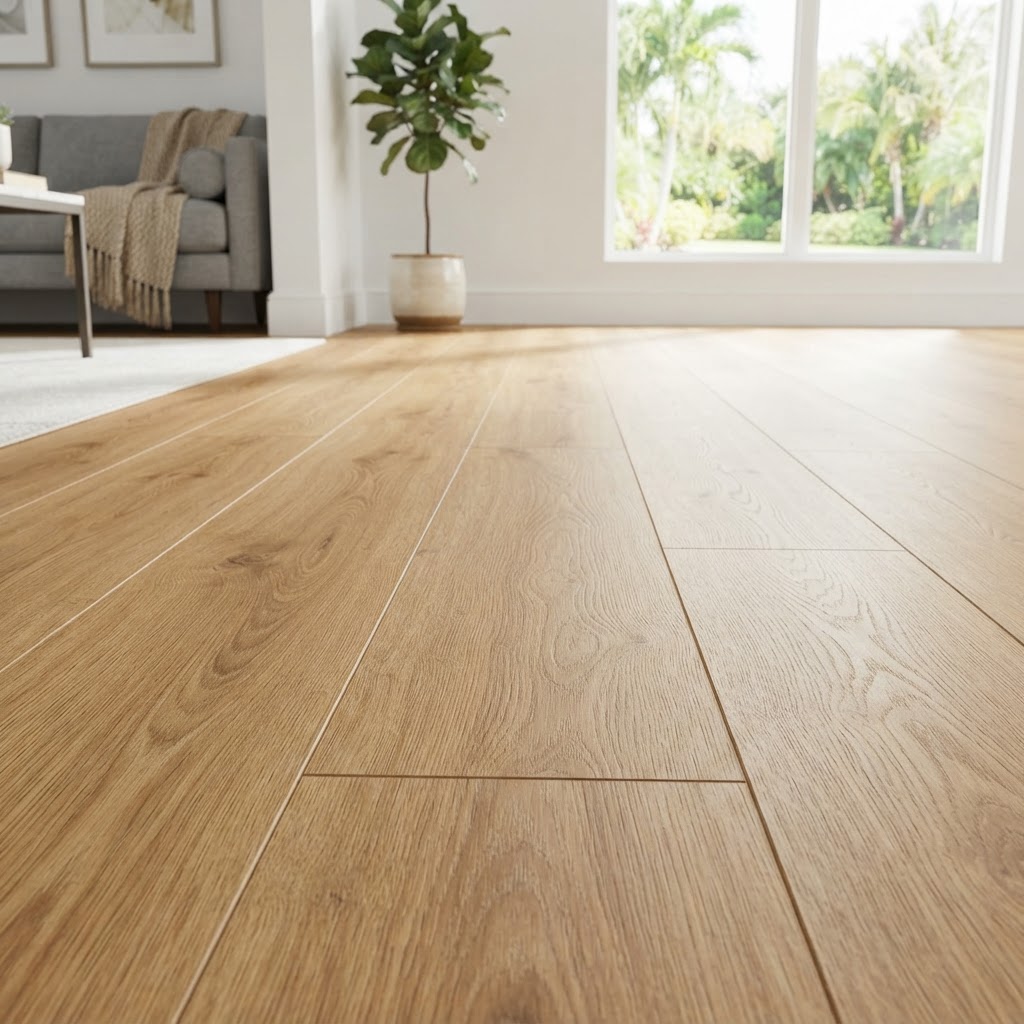
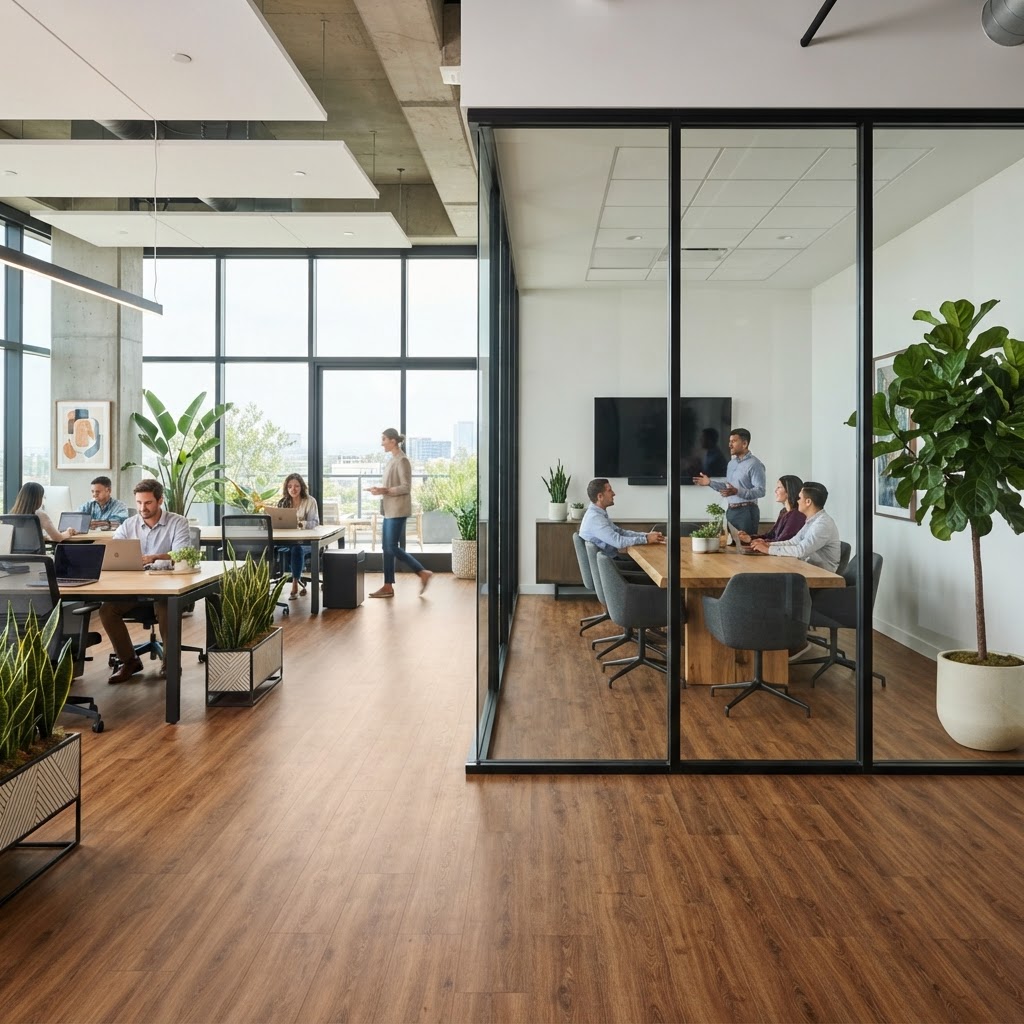
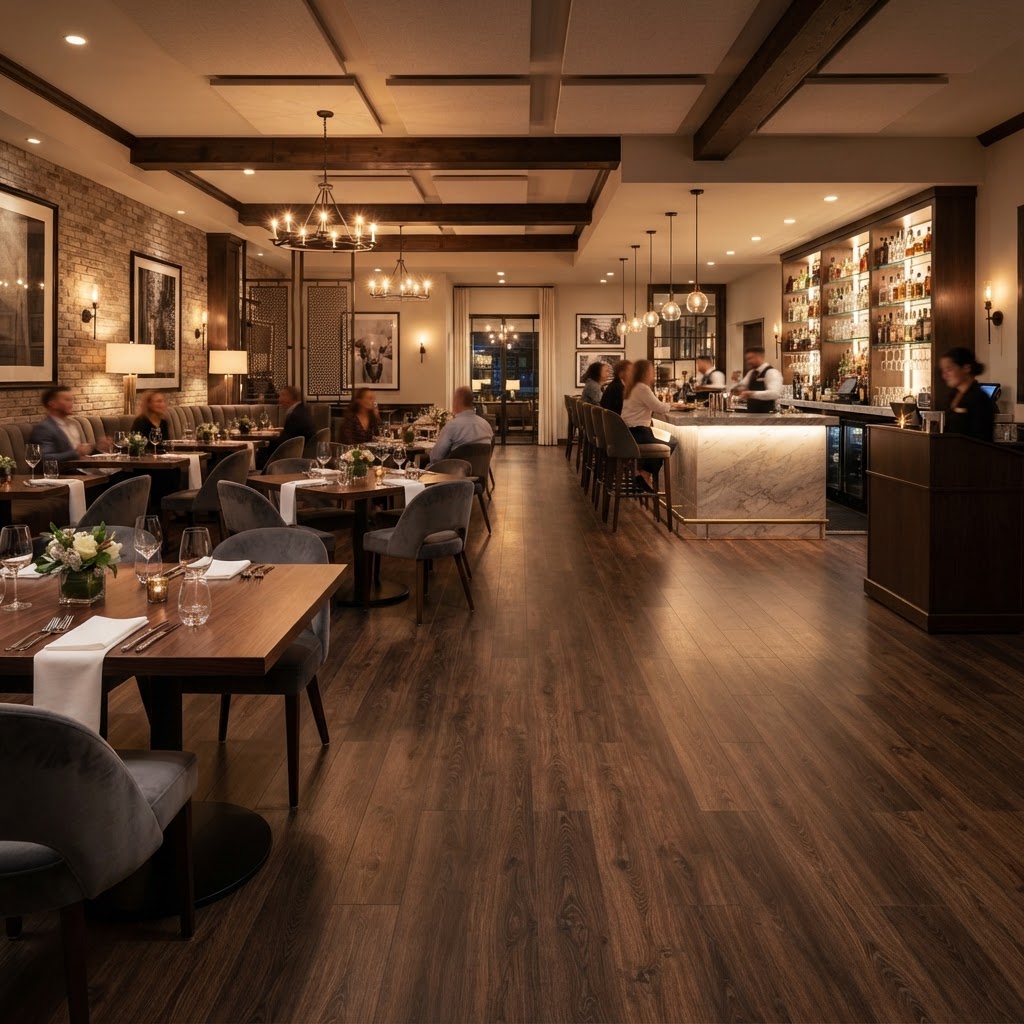
Glue down luxury vinyl is the top recommendation for restaurant dining areas because:
- Food and beverage spills wipe up without staining or damage
- Wood and stone visuals create a warm, upscale dining atmosphere
- Waterproof construction handles the inevitable drink spills
- 20+ mil wear layer withstands heavy guest traffic
- Individual planks can be replaced if damaged
Explore our Glue Down Luxury Vinyl Collection for commercial-grade products.
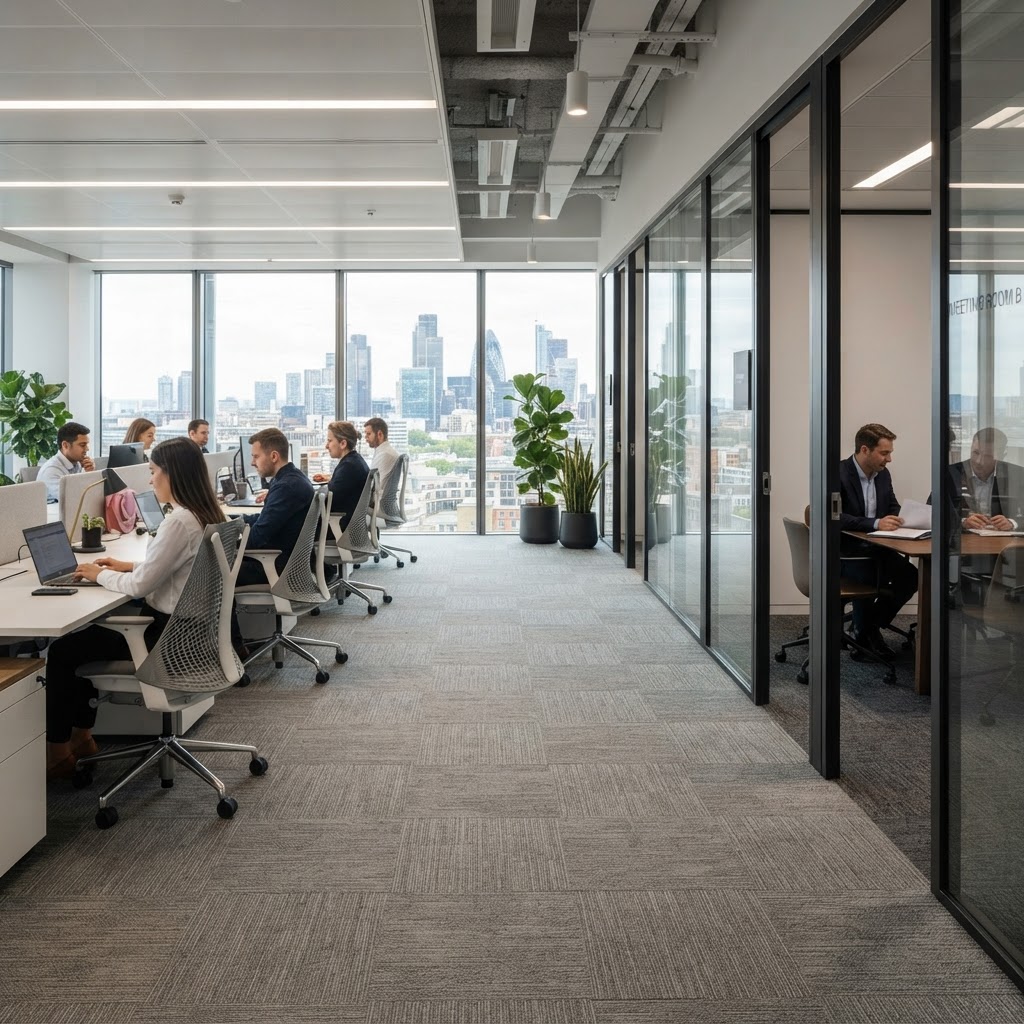
Commercial Carpet Tile (For Upscale Dining and Acoustic Control)
Best for: Fine dining, private dining rooms, bar/lounge areas where acoustics matter
| Factor | Rating |
|---|---|
| Aesthetics | Excellent (wide range of patterns) |
| Spill resistance | Moderate (clean promptly) |
| Cleanability | Moderate (spot clean, periodic extraction) |
| Comfort | Excellent |
| Acoustics | Excellent |
| Durability | Very good (Class 33) |
| Lifespan | 8–12 years |
Carpet tile in dining areas offers:
- Superior acoustic performance — absorbs noise in busy dining rooms
- Comfort underfoot for guests and staff
- A non-slip surface that is safer when wet
- Individual tile replacement for stained or damaged areas
- Design flexibility with patterns and colors
When to choose carpet tile for dining: Fine dining establishments, private dining rooms, wine bars, and any space where acoustic comfort and a softer ambiance are valued over maximum spill resistance.
See our Carpet Tile Collection for commercial-grade options.
Expert Tip: In a busy dining room with hard flooring, noise levels can reach uncomfortable levels during peak hours. Carpet tile in strategic zones — like the bar area or a private dining room — can dramatically improve the acoustic environment and guest experience.
Slip Resistance
Slip resistance is a safety and liability issue in restaurants:
Kitchen Slip Resistance
- Kitchens require the highest slip resistance due to grease, water, and food spills
- Look for products specifically rated for commercial wet/greasy environments
- Slip resistance is measured by Static Coefficient of Friction (SCOF) or Dynamic Coefficient of Friction (DCOF)
- Kitchen flooring should meet or exceed a DCOF of 0.42 (ADA standard) and ideally higher for greasy environments
Dining Area Slip Resistance
- Dining areas need moderate slip resistance for wet spills and tracked-in moisture
- Textured luxury vinyl and carpet tile both provide adequate traction
- Avoid highly polished surfaces in areas where drinks may spill
Entryway Considerations
- Entryways are high-risk for slips due to rain and tracked-in water (especially in Florida)
- Use aggressive slip-resistant flooring at entries
- Consider entrance matting systems to capture moisture
Maintenance
Kitchen Flooring Maintenance
| Task | Frequency |
|---|---|
| Sweep/degrease mop | Daily (end of service) |
| Deep clean with degreaser | Weekly |
| Inspect for damage | Weekly |
| Re-seal grout (if tile) | Annually |
| Inspect coving | Monthly |
| Replace damaged sections | As needed |
Dining Area Flooring Maintenance (Glue Down Vinyl)
| Task | Frequency |
|---|---|
| Sweep | Daily (or more during service) |
| Damp mop | Daily (end of service) |
| Deep clean with commercial machine | Monthly |
| Inspect for damage | Weekly |
| Replace damaged planks | As needed |
Dining Area Flooring Maintenance (Carpet Tile)
| Task | Frequency |
|---|---|
| Vacuum | Daily |
| Spot clean spills | Immediately |
| Hot water extraction | Monthly to quarterly (depending on traffic) |
| Tile rotation (high to low traffic) | Every 6 months |
| Replace stained/damaged tiles | As needed |
Expert Tip: In restaurants, spills should be addressed immediately regardless of flooring type. Even waterproof vinyl can become a slip hazard when wet, and a spill left on carpet will stain and harbor bacteria. Train staff to treat every spill as a safety issue, not just a cleaning issue.
Health Requirements
Restaurant flooring must comply with health department regulations:
FDA Food Code Requirements
- Food preparation areas: Must have smooth, durable, easily cleanable, non-absorbent surfaces
- Coved junctions: Wall-floor junctions in food prep areas must be coved and sealed
- No carpet: Carpet is prohibited in food preparation, food storage, and ware-washing areas
- Drainage: Floors in areas subject to flooding must be graded to drain
Local Health Department Requirements
- Florida restaurants must meet Florida Department of Agriculture and Consumer Services or local health department standards
- Inspections may check for:
- Cracked or damaged flooring that cannot be properly cleaned
- Missing or damaged coving
- Carpet in prohibited areas
- Flooring that retains grease, food debris, or moisture
Fire Code Requirements
- Commercial flooring must meet fire safety standards
- Carpet tile must meet commercial fire ratings (pill test, radiant panel)
- Epoxy and vinyl products must meet smoke generation limits
Comparison: Dining Area Flooring Options
| Factor | Glue Down Vinyl | Carpet Tile | Ceramic/Stone Tile |
|---|---|---|---|
| Spill resistance | Excellent | Moderate | Excellent |
| Cleanability | Excellent | Moderate | Good (grout issue) |
| Acoustics | Moderate | Excellent | Poor |
| Comfort | Moderate | Excellent | Poor |
| Aesthetics | Excellent | Excellent | Excellent |
| Slip resistance | Good (textured) | Excellent | Variable |
| Durability | Excellent | Very good | Excellent |
| Lifespan | 8–15 years | 8–12 years | 20+ years |
| Maintenance effort | Low | Moderate | High (grout) |
| Cost | Moderate | Moderate | High |
Pros & Cons
Glue Down Vinyl (Dining Areas)
Pros:
- Waterproof — handles any spill without damage
- Easy to clean and sanitize
- Attractive wood and stone visuals
- Excellent durability (20+ mil)
- Individual plank replacement
- Moderate cost
Cons:
- Moderate acoustic performance
- Moderate standing comfort
- Can be slippery when wet (choose textured products)
Carpet Tile (Dining Areas)
Pros:
- Excellent acoustic performance
- Superior comfort underfoot
- Non-slip surface
- Design flexibility
- Individual tile replacement
- Hides minor soil and wear
Cons:
- Spills must be cleaned promptly (staining risk)
- Requires regular vacuuming and extraction
- Not suitable near kitchen entrances
- Shorter lifespan than vinyl
Buying Checklist
- Zone planning: Identify kitchen, dining, bar, restroom, and entry zones
- Health code: Verify products meet FDA Food Code and local health department requirements
- Kitchen flooring: Commercial epoxy, quarry tile, or specialized slip-resistant vinyl
- Dining flooring: Glue down vinyl (20+ mil) or commercial carpet tile (Class 33)
- Slip resistance: Specify products rated for the wet/greasy conditions of each zone
- Coving: Plan coved wall-floor junctions in all food prep areas
- Drainage: Ensure kitchen floors are graded to drains
- Subfloor preparation: Have PTAH Flooring assess and prepare the subfloor
- Installation scheduling: Plan for installation during closed hours or temporary closure
- Maintenance plan: Establish daily and periodic cleaning protocols
- Spare inventory: Order extra tiles/planks for future replacements
Our Recommendation
For restaurants across the Treasure Coast — whether you're opening a new restaurant in Stuart, renovating a dining room in Port St. Lucie, or updating a kitchen in Jupiter — the zoned flooring approach delivers the best combination of health compliance, safety, aesthetics, and long-term performance.
- Kitchen: Commercial-grade, slip-resistant, impervious flooring with proper coving
- Dining areas: Glue down luxury vinyl (20+ mil) for maximum spill resistance and easy cleaning, or commercial carpet tile for acoustic comfort in upscale settings
- Bar/lounge: Glue down luxury vinyl for durability and spill management
- Entryways: Slip-resistant glue down vinyl (28 mil)
Explore our commercial flooring collections:
- Glue Down Luxury Vinyl — for dining areas, bars, and entries
- Carpet Tile — for acoustic comfort in dining and lounge areas
Ready to start your restaurant flooring project? Contact PTAH Flooring for a consultation across Stuart, Port St. Lucie, Palm City, Jensen Beach, Fort Pierce, Jupiter, Palm Beach Gardens, and Vero Beach. We understand health code requirements and can help you specify the right products for every zone of your restaurant.